Prepare for the Holiday Package Surge: A Capacity Guide for Community Mail Systems
November 18, 2025
Top 5 Things to Consider When Choosing a Mailbox Post
March 3, 2026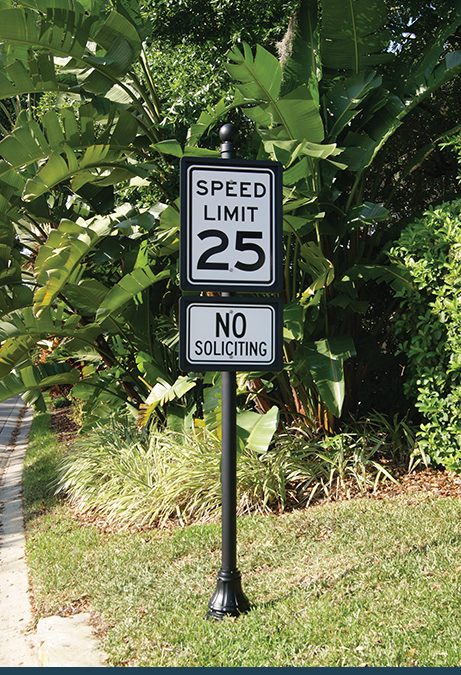
Most homeowners and community leaders share the same goal — creating a safe, welcoming place to live, work, and raise families. Tools like security cameras, neighborhood watch programs, brighter lighting, and communication apps all play an important role in building a secure environment. But one simple safety measure is often overlooked:
Clear, well-placed signage.
Thoughtfully designed safety signs do more than mark boundaries — they increase awareness, discourage suspicious behavior, and signal that residents are actively watching out for their community. When combined with other safety strategies, signage can be an effective crime-prevention tool.
Below are some of the most impactful sign types to consider for your neighborhood.
1. Surveillance & Security Camera Signs
Security cameras help document suspicious incidents — but signage can stop many problems before they happen.
Posting visible surveillance signs lets visitors know that the area is monitored and activity is being recorded. This awareness alone can make someone think twice before engaging in theft, vandalism, or trespassing.
Security camera signs are especially useful for:
-
Entrances and driveway areas
-
Parking lots and alleys
-
Business storefronts
-
Community parks and gathering spaces
To maximize effectiveness, place signs where they are easy to see and position them near cameras or key sightlines so the message feels credible and intentional.
2. Neighborhood Watch or Crime Watch Signs
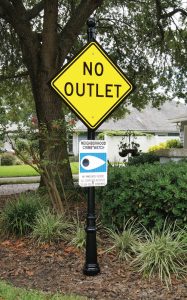
Neighborhood watch programs are built on cooperation — residents, local law enforcement, and municipal leaders working together to identify suspicious activity and report concerns promptly.
Installing Neighborhood Watch or Crime Watch signs reinforces that effort and communicates that your community is alert and engaged.
These signs help:
-
Encourage residents to report unusual activity
-
Deter potential criminal behavior
-
Promote a shared sense of responsibility
They are commonly installed near:
-
Subdivision entry points
-
School zones
-
Parks and playgrounds
-
Community trails and sidewalks
Strategically placed watch signs show that neighbors are not only present — they are paying attention.
3. No Soliciting Signs
Not every door-to-door visitor has bad intentions — but in some cases, criminals pose as salespeople to gather information about homes or residents.
A No Soliciting sign establishes a clear boundary and discourages uninvited visitors from approaching your door. If someone ignores the sign, neighbors and homeowners are better able to recognize that behavior as unusual or suspicious.
These signs are ideal for:
-
Front porches and entryways
-
Walkways and driveways
-
Multifamily housing complexes
-
Businesses with frequent foot traffic
While soliciting is not illegal in every city, signage communicates your expectations politely and clearly — before someone rings the doorbell.
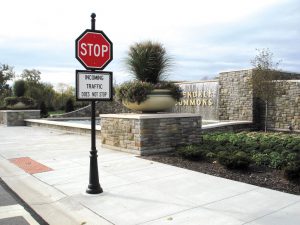
4. Private Property & No Trespassing Signs
For homes on private drives, large properties, wooded lots, or secluded areas, Private Property and No Trespassing signs set firm legal and personal boundaries.
These signs:
-
Make property limits clear
-
Help prevent accidental entry
-
Support legal enforcement when necessary
-
Discourage loitering or unwanted activity
When combined with cameras or lighting, they send a strong message that the property is monitored and protected.
To improve visibility and durability, consider installing signs on decorative posts or adding solid backers so the message stands out in both daylight and low-light conditions.
Making Safety Signage More Effective
Posting signs alone won’t eliminate every safety concern — but when used as part of a broader community effort, they can make a real difference.
For best results:
-
Ensure signs are visible during both day and night
-
Pair signs with lighting where possible
-
Maintain and replace worn or faded signage
-
Place signs at logical entry points and high-traffic areas
-
Use durable materials suited for outdoor environments
Attractive, well-designed signage doesn’t just enhance safety — it also supports neighborhood pride and curb appeal.
Final Thoughts
A safe neighborhood is built through awareness, communication, and shared responsibility. Signage reinforces those values by reminding residents — and the public — that communities are engaged, vigilant, and committed to protecting one another.
If your customers would like help choosing signage styles or exploring customizable neighborhood safety signs, just let us know — We’d be happy to help you shape ideas for your community.
Contact
Basic Contact form